Wednesday, April 30, 2025

April birding

April is my favourite month of the year as it sees the arrival of the summer visitors, both birds that are coming here to breed and others that are just passing through on their way to breed elsewhere, as well as a big emergence of insects. 

Patch year lists increase at almost every visit and the bird song goes up to number 11. Some years a rare bird or two will pitch up in London and I'll be tempted to go and see it but that didn't happen this year, most likely a result of the almost continuous fine weather that allowed birds a clear passage. Apart from Hoopoes which had a bumper year in the UK with maybe up to half-a-dozen in London.

Rainham Marshes

I visited Rainham 14 times this month, just one short of half the month. I made sure I was there on the days it actually rained but they surprisingly didn't produce any interesting migrants. During the month I did manage to connect with my main targets on the Thames: Arctic Tern, Black Tern and Little Gull. The only one I missed was Sandwich Tern which typically appeared on days I wasn't there.

The wader passage picked up from mid-month with a decent showing of Bar-tailed Godwits and regular Whimbrels with a few Grey and Ringed Plover sprinkled in as well as two Greenshank. Again, more birds were seen whilst I was elsewhere: Knot, Ruff and Little Stint but there's always May which is traditionally better for waders.
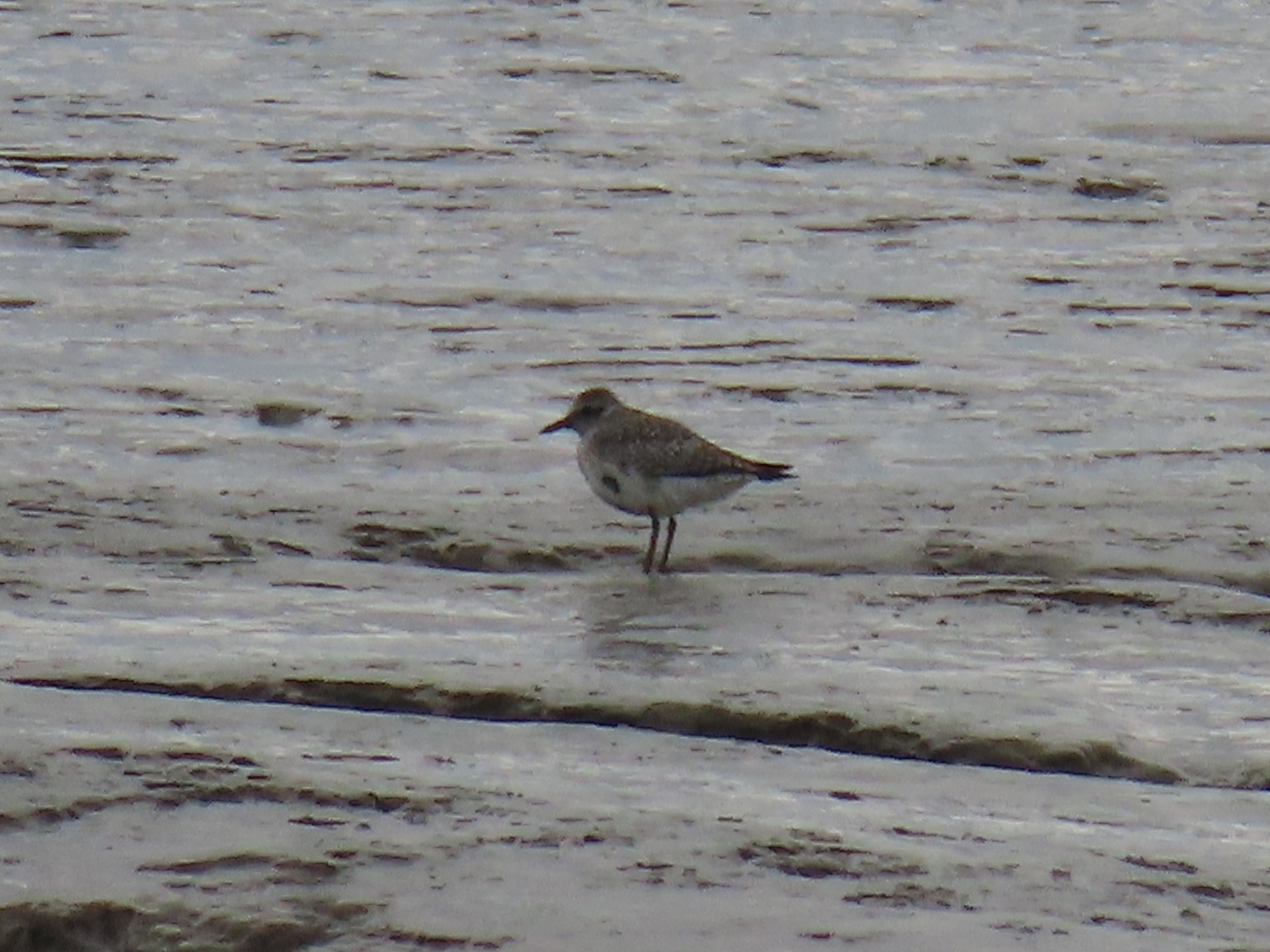
Grey Plover

Grasshopper Warblers were reeling from at least three different spots and all the other regular warblers were around but I never did manage to track down the elusive Garden Warbler. Wheatears were playing hard to get, no doubt taking advantage of the nice weather and going straight to their breeding grounds until late in the month when a few were along the river wall.

Great Egrets and Spoonbills were seen on the reserve but the best water bird was a drake Red-crested Pochard that I found which then proceeded to hang around. They're fairly rare here and the few that have turned up before didn't stay long. I missed the last one as I was in Costa Rica last year so it was a nice one to add to my patch list.

Red-crested Pochard

Raptors were on the move as well in April with frequent Red Kites over, high-flying Buzzards and an arrival of Hobby at the end of the month.

Red Kite

I had hoped to put in a 'big day' again this year but it was hard to find a day with the right conditions and on the only potential day the reserve was closed due to a lack of staff so that scuppered that plan.

Another April favourite - Orange-Tip


Dagenham Chase

I managed 13 visits this month, often walking up through Beam Valley and one afternoon twitch when there were a few waders around. I'm sure we miss waders here as there was no one here on the wet morning when Bar-wits were seen at several London sites.

On one notable day mid-month I found a singing Garden Warbler and was just on my way back to The Slack to see a Wheatear that had just arrived when a Weasel ran out in front of me - three patch ticks! Out of all the spring arrivals I think Wheatear is the one bird I look forward to seeing the most. I added another patch tick later in the month when I popped up in the afternoon to see a Dunlin that had come in with a Little Ringed Plover in the rain.

Wheatear


Dunlin & Little Ringed Plover

Sum-plum Dun

Swallows breed at the riding school at The Chase


Beam Valley

Most of the regular summer visitors arrived this month with Cuckoo being pretty vocal on recent visits. Reed Warblers, Blackcaps and Whitethroats quickly settled in and later in the month Lesser Whitethroats arrived but no Garden Warbler yet.

Chiffchaff

Egyptian Goose on a tree stump

Tylers Common

I popped over here early one morning for my annual Nightingale fix. As usual there were a couple of rival males singing at each other around the pond. There were also Cuckoo, Garden Warbler and Lesser Whitethroat singing.

Pages Wood

As I didn't spend long at Tylers Common I decided to visit the nearby Pages Wood as I hadn't been here before. It's a little bit in the middle of nowhere, between Upminster and Harold Wood. I started at the north end, near the 346 bus stop. There's a good path network around the wood.

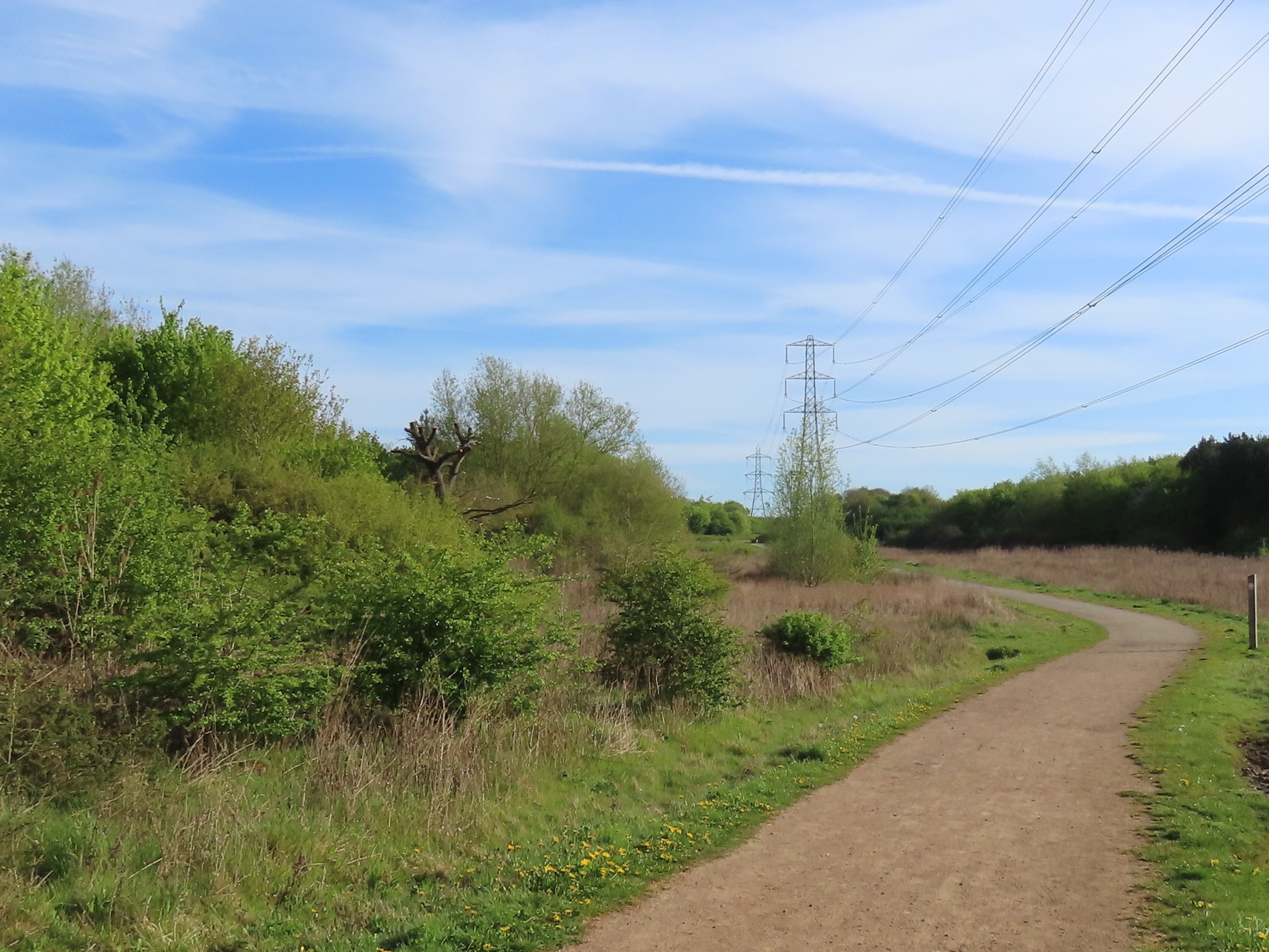

The most unusual birds here I discovered was a pair of Bullfinch, a hard bird to find in London nowadays. I exited in the SE corner and walked towards Upminster and caught the bus back to the train station.

Barking & Becton

I found time for a couple of Thames-side visits late in the month, at Barking Riverside and Becton Creekside. I was hoping for a few waders but there were none around on the days I went. The Ravens are nesting on one of the pylons at Becton, probably the closest pair to the centre of London.

Raven

On the foreshore at Becton I watched a Heron battle an Eel. Every time the Heron attempted to eat the Eel it formed a loop making it difficult for the Heron to swallow it. The Heron kept dropping it and biting its head and eventually it succumbed and the Heron was able to swallow it.


Heron with Eel

On one walk down to Dagenham Dock station I heard a Black Redstart singing and saw it on subsequent visits.

1st-summer male Black Redstart on a security light

With April now over, I'm hoping that May will produce some much needed rarities as I've caught up with all the regular summer visitors.

Sunday, April 6, 2025

March birding

After being out of the UK for most of February, winter birding was mostly over by the time March started. March is one of those odd months that can be different every year depending on the weather. This year it was almost a pre-spring with a few early spring migrants coming through but the dry conditions meant most of the early arrivals went straight through.

Beam Valley

It was a fairly quiet month here although I did manage to get my first Kingfisher and Pheasant this year. Chiffchaffs and Blackcaps were plentiful by the end of March but no Willow Warbler so far.

Blackthorn blossom

Dagenham Chase

I made a conscious effort to visit here fairly regularly with 13 visits logged this month. I was hoping for some waders but apart from the odd Green Sandpiper, nothing else was seen. I did manage to catch up with Tawny Owl on its day roost thanks to Vince. The first summer visitors were Sand Martin and Blackcap on 22nd, followed by Willow Warbler on 28th. By the end of the month most of the overwintering ducks and gulls had migrated.

Greylag Goose

Kestrel

Shoveler

Wigeon


King George V Reservoir

I only made one trip this month, on the 14th, but it was a very productive one. The highlights were a drake Garganey, my first summer visitor of the year and not one I typically see first, and a drake Smew to make an unlikely duo. I also saw my first Barnacle Goose of the year along with both species of over-wintering divers, two Black-necked Grebes, Peregrine, Raven and finally caught up with one of the Black Redstarts. The sunny weather brought out the raptors and several Red Kites and Buzzards soared over the reservoir.

Barnacle Goose

Red Kite

Smew

Rainham Marshes

I only managed four visits in March as it's been very quiet here but it's now picking up. The standout bird was the Green-winged Teal that has taken up residence here since March 22nd. This American version of our Teal has a chequered history, being counted as a race of Teal, then a separate species and currently the two main world listing organisations cannot agree!

Green-winged Teal (note the vertical white stripe compared to the horizontal one on the regular Teal on the left).

The day I first saw the GW Teal (23rd) ended up being a really good day as there was a Spoonbill on the reserve and a Common Scoter in Aveley Bay. There weren't many different summer visitors seen in March but I did get an early Little Ringed Plover on 21st.

Little Ringed Plover

Scotland

I managed a short break towards the end of the month. I went up on the train to Edinburgh with John & Janet, staying in an apartment just off the Royal Mile for three days. On the first afternoon we had a short walk in Holyrood Park - it was a lot bigger than I expected and very hilly.

On our first full day we took the train to Musselburgh then walked along the river Esk down to the sea and then along the coast and back over by the lagoons. It was good to catch up with a lot of seaduck that I rarely seen down in the south now with Eider, Long-tailed Duck and Velvet Scoter all being close inshore. On one of the lagoons I managed to refind an elusive Jack Snipe.

Goldeneye

Velvet Scoter

Oystercatcher

The following day we took a cab to Gullane Point. We spent a fair bit of time looking for the White-winged Scoter that was wintering here. I was expecting it to be with Velvet Scoters but there was only a large flock of Common Scoter in view. Eventually, John picked it up flying in and we had reasonable views of it but it was still too far for a photo. We walked along the coast to Aberlady Bay, although it was very difficult trying to find the proper path  as we ended up in dead end coves or on the golf course a couple of times.

Bullfinch

Reed Bunting on the golf course

Toad

We did manage to find a single Purple Sandpiper and a Whimbrel which was either over-wintering or a very early migrant. Once we arrived at Aberlady we got the bus back to Edinburgh. On our last day we did another walk in Holyrood Park, going in the opposite direction this time. On the way back we ran into a flock of Bullfinches in a housing estate - it's good to know that they're still plentiful up here as they've disappeared from most sites in London now.

Bullfinch


Thursday, March 13, 2025

New Zealand Part 10

New Zealand Trip Report Part 10 

Wednesday Feb 26th

We left our our AirBNB at 7.15 and drove down to the harbour for the ferry back to South Island. Once on board we took our usual spot at the back of the boat for an hour’s seawatching. Unlike the crossing from South Island, there were far fewer people on this early crossing. It was a bit rougher as well as with a lot of spray coming down the port side.

Leaving Stewart Island

No sign of Zippy, George or Bungle


There was the usual White-capped Albatross milling just outside the harbour and Foveaux’s Shag but no sign of any penguins. On the strait there were more birds using the windier conditions with several Mottled Petrels and a few Common Diving Petrels. Once back to Bluff we loaded the van up and headed off with another fairly long driving day to go.

We made a short stop at Invercargill Estuary, where there were plenty of Royal Spoonbills and a selection of the by now usual ducks. 


Grey Teal

Royal Spoonbills


After the obligatory bakery stop we carried on until lunch, stopping at a little wetland reserve. We had a walk around after lunch hoping for Baillon’s Crake but there was no sight or sound of one.

Mid-afternoon we arrived at Katiki Historic Reserve, a coastal spot where Yellow-eyed Penguins breed. They nest in the bushes just up a hill from the shore so we waited, hoping for an adult to either come in with food or to head back out to sea. After 90 minutes we still hadn’t seen one then Brent found one standing on a slope, probably an adult looking after a young one that had just ventured out for a break. We quickly scoped it and rattled off a few photos before it decided to return to the bushes and we never saw any more.


Yellow-eyed Penguin


We drove to the town of Oamuru and made a quick stop at an old wooden pier that had hundreds of shags roosting on it, most of which were Ortago Shag. 


Ortago Shag


Spotted Shag


We then headed to our motel and after a quick turnaround, went off to dinner.


Thursday Feb 27th

Our last full day in New Zealand. We checked out of our motel at 7.30 and drove to Fairlie where we visited another highly recommended pie shop. I went for their speciality – a salmon & bacon pie which was excellent. As the pies were hot they were eaten there and then rather than being saved for lunch.

We then headed to the alpine lakes around Lake Tekapo to look for one remaining endemic. There was no sign of it in the first bay we checked but there was an assortment of waterbirds including a Great Crested Grebe, just the second time we’d seen one.

Cabbage White


Paradise Shelduck


At another swampy area we looked for Baillon’s Crake yet again but this time with success as one fed just inside the vegetation, showing well as it walked into the gaps.

Banded Dotterel


Finally, we struck lucky and five Black Stilts were seen at another spot. They were a bit distant and spent a lot of the time dozing but the world’s rarest wader was in the bag. Later in the day we also saw them at two other spots, seeing a total of 12 birds.


Black Stilt


The scenery was spectacular with mountain ranges along two sides and towering hills along another with a large plain in the middle with streams running through it. We went to a couple of viewpoints, including going up to the observatory and also had good views of Mount Cook. All too soon it was time to leave and to yet another motel but this was to be our last night in the country.


Mount Cook


Friday Feb 28th

The last day was not much more than a drive to Christchurch Airport although it did take all morning. Most of us had flights scheduled for early evening so we had a little wait before checking in. While some of the party headed back via Auckland, my flight went to Sydney and then on to Dubai arriving back in Gatwick at Saturday lunchtime.

Our eBird route through New Zealand


Butterflies & Dragonflies of Java & Sumatra

These are some of the butterflies and dragonflies that I photo'd in Java and Sumatra in August 2026. There are a few I've not specif...